Guest Blog article by Stephen Dupont, Pocket HerculesMINNEAPOLIS (July 2011) -- You wear a helmet to protect your head. You wear sunglasses to protect your eyes from dust and dirt. You ride defensively to avoid careless drivers, kids, and dogs.
But more often than not, you, like many who enjoy bicycling, forget to put on your sunblock before you hit the roads and trails.

If you love cycling and want to enjoy it well into your senior years then protect yourself from the sun. That’s the advice for America’s
57 million bicyclists from a leading plastic and reconstructive surgeon who has treated thousands of patients over the course of his 15-year career for skin cancer and melanoma.
As the days grow longer and warmer, and the sun intensifies in it’s strength, cyclists need to take precautions against the sun’s harmful rays, says Dr. Sam Economou, who leads
Plastic Surgery Consultants Ltd., a practice located in Edina, Minn., a suburb of Minneapolis.
The reason is simple: skin cancer is on the rise. In fact,
according to the American Cancer Society, more than 2 million cases of non-melanoma skin cancer are diagnosed each year. In addition, about 68,000 cases of melanoma, the most serious type of skin cancer, are diagnosed yearly. While more people are detecting cancer earlier, increasing their chances of survival, cancer rates are actually rising, especially among young people who use tanning booths and those who do not use sunblock when working and playing outside.

Cycling is about spending time outdoors. And more often than not, most cyclists enjoy riding their bikes when the weather is nice and sunny. That puts many of America’s 57 million cyclists at risk for skin cancer, says Dr. Economou. The more time you spend outdoors cycling, the greater risk of exposure to harmful ultraviolet radiation and sunburns.
People who bicycle a lot have several strikes against them when it comes to skin cancer, notes Dr. Economou. Because many cyclists ride near their homes, they think they’re not at risk if they don’t put on sunblock -- even for a short ride. The problem is that cyclists tend to expose more skin than other athletes because of the clothes they wear (shorts and short-sleeve shirts). In addition,
many cyclists may not realize that water, sand, and asphalt streets reflect dangerous UV rays.
To help cyclists lower their risk of developing skin cancer, Dr. Economou offers these tips:
Apply sunblock. Always apply sunblock lotion at least 30 minutes before going out into the sun, before you start to perspire, to allow the sunblock to be absorbed into your skin. If you think you may remove some cycling clothes during your ride, consider applying sunblock before you get into your cycling clothes. Even if you’re riding at 6 a.m., apply sunblock and reapply it after every two hours you’re outside. Use a sunblock with a SPF rating of at least 30 an arms, legs, face and neck and a water-resistant SPF of 50+ on your nose and the top of your ears. Make sure that your sunblock is effective against both UVA and UVB rays.
 Wear a hat.
 The most susceptible place on your body for skin cancer is your head -- the top of your head, your face, nose and ears. Believe Dr. Economou, reconstructive surgery on the nose and ears is challenging. Cyclists should wear a thin
cycling cap underneath their helmets to prevent from being sunburned on the top of their head. Always apply sunscreen to the face, especially the nose and ears, and to the back of the neck.
Polarized UV-blocking sunglasses. Cyclists should always wear sunglasses to protect their retinas from harmful UV rays, as well as dust particles on a windy day. Sunglasses that wrap around your face offer the best protection. Polarized lenses help cut the glare (from nearby water, sand, asphalt and snow) to help you see better during your ride. A really good pair of polarized sunglasses is one piece of equipment in which every rider should invest. They’re just as important as buying a bike.
 Wear cycling gloves.
 Wear gloves specifically designed for cycling. Padded gloves not only make riding more comfortable, they’re essential to preventing nasty scrapes in the event of a fall. Gloves also are helpful in protecting the tops of your hands from sunburn, which is one of the most exposed parts of your body during a ride. Don’t forget to apply sunblock to your hands before putting on your gloves.
Wear protective clothing. If you have a high risk or history of skin cancer in your family you should look into protective clothing. Even on the hottest days, wear lightweight long-sleeve shirts,
caps,
socks and
shorts. Equip yourself with
cycling jerseys and shorts that are specially made to block the sun and wick away moisture to keep you cool while out on the road or trail -- apparel that offers a UPF rating of at least 30+, as recommended by the
Skin Cancer Foundation, to protect against harmful UVA/UVB rays. Remember, UV rays are present even on cloudy days.

Cycling jerseys, such as the
Pearl Izumi Annata White Elite Limited Cycling Jersey pictured here, feature Pearl Izumi's famous moisture-wicking polyester fabric,
UPF 40+ protection from the sun's harmful rays, and a form flattering fit. This bold new design also offers Direct-Vent size panels to enhance syle, performance and comfort.
Here’s another excuse for getting yourself out of bed at the crack of dawn. It may be more pleasant to wait until the day has warmed up and the sun is shining, but that’s when the sun is at its strongest, and cruelest, in terms of skin cancer. And don’t fool yourself on cloudy or partly cloudy days. Harmful UVA and UVB rays still get through clouds. Instead, shift your riding time to early morning or early evening to avoid the affects of the sun. Just don’t forget to wear highly visible clothing (screaming yellow, orange or lime green) to make sure automobile drivers and other cyclers see you.
Avoid sunburns. Repeated sunburns over time can cause significant damage to your skin. Severe sunburns as a child are a leading risk factor in developing skin cancer as an adult. Sunburns happen though, despite our best intentions. If you do get a severe sunburn, stay hydrated, treat the sunburned area with an aloe-based lotion, take cool showers, and if you’re experiencing headaches, take a pain reliever.
| | |
| | |
|
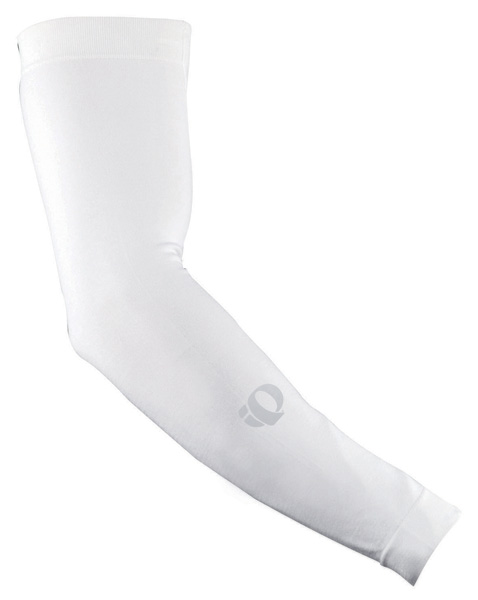
| |  KEVIN SAYS: Give the Pearl Izumi Sun Sleeves a try! KEVIN SAYS: Give the Pearl Izumi Sun Sleeves a try!
Having the fair-skinned complexion that comes as standard with red hair, I have to watch myself in the sun lest I should become lobster-man! I tried the Pearl Izumi Sun Sleeves out and found them to be great and much more convenient than applying and re-applying lotion. I guess there is less chance of 'missing a bit' also, and ending up with red patches that might have escaped the lotion. Any concerns about putting on what seem like armwarmers for a hot summer's day soon went away once I started out. These actually did feel cool to ride in and I had no problem leaving them on for my entire ride. I would recommend these highly for anyone looking for sun protection - which I guess should be everyone, right? Be safe out there! We finally got some good weather in Portland and the mercury was up there in the 90's - well that's hot for us ! Thing is - the hotter it got, the cooler these, and my arms, felt. To add to this - the last couple of days have started out chilly and these did the trick keeping the goosebumps away in the morning. Later on when the sun blazed throught the cloud cover I did not need to take them off and/or apply sunscreen. I am loving my sun sleeves! | |
| |
| |
| | |
Stay hydrated. To maintain healthy skin, don’t forget to stay hydrated while cycling by drinking plenty of non-alcoholic beverages before and during a ride. When your skin dries out or is not hydrated properly, it’s more susceptible to sunburn and long-term skin damage. Water remains the best liquid to drink while exercising. Sports drinks add empty calories.
Conduct skin cancer self-examinations. If you have a fair complexion, multiple freckles and moles, and experienced severe sunburns as a child, you have some of the leading risk factors for skin cancer. Take this seriously, especially if you spend a fair amount of time outside cycling. At least once a month, before you get into or just out of the shower, look at your
skin. Look at moles and freckles to see if you notice any changes in their shape, size, color or asymmetry. Make an appointment once a year with your doctor or a dermatologist to look at your skin as part of an annual exam. Especially watch moles and freckles on high-risk areas of your body, the face, nose, ears, the back of your hands and your calves.


 According to the