BicyclingHub.com owner Doug Duguay and Dan Kaufman of PDXK Productions are heading down to Bend, OR this weekend for three full days of cycling festivities in one of the most premier road cycling, mountain-biking, hiking and cross-country skiing areas in the country. Be warned: they've got bikes and cameras in tow, and aren't afraid to use them.
Can't travel to Bend this weekend? Keep in touch via our Facebook and Twitter accounts for pics, video and live updates--all the news that's fit to be posted, tweeted, and shared with our readers and fans.
When I was asked to tell my story, I thought it would be easy. After all, it’s me we’re talking about. But when it comes down to it, it’s not always easy to let the outside world into one’s life, or explain what things have been like to those who haven’t actually lived through them.
As a youth in the San Francisco Bay Area, I was into everything athletic. I don’t think I had any special abilities; no matter what the sport, I just loved to play. I had good natural strength and balance, but wasn’t the fastest, tallest, or possessed the most endurance. However, I was very competitive. I roller-skated, ran track and cross-country, served volleyball, and even did the steeplechase and some triathlons. Running led to a recruitment trip at Colorado State University: I fell in love with the mountains, and instantly knew I was home.
Injuries put an end to my competitive efforts early on, but since athletics weren’t everything to me, that was ok. I remained active, worked on my studies, changed majors a couple of times, and then took some time off for a paid internship doing genetic research and development in California. I was aiming for graduate school, where I hoped to study medicine.
Everything changed just as I was preparing to take that next step. I’d been back from my internship one semester when one by one, things began to go wrong. At first, it seemed relatively simple… a bad reaction to a spider bite, then hypothyroidism and seemingly mild anemia. It was summer, so I had time to deal with those things… easily treated, right? It was when I developed an odd rash that I realized it wasn’t so simple. That day, my doctor drew another complete blood count, and the next thing I knew, he was calling a hematologist and getting me in that very day for a bone marrow biopsy. I wasn’t just anemic. Everything was low. I had no immune system. I was making the cells, but they weren’t surviving to make it beyond my bone marrow- they weren’t reaching maturation.
That was bad enough, but less than two months later I was on a referral to see a different hematologist at CU Denver and for a blood transfusion (I had about ½ the normal count by then and was ghostly white) when yet another diagnosis was made in addition to the blood disorder. I’d developed collapsing glomerulopathy- a kidney disease usually seen in people with HIV. I didn’t have HIV, though. No one truly knew what I had. I was basically told at the time of diagnosis that the kidney disease had a rate of 100% end stage within 5 years, and recurrence in transplants. I was told recovery was unheard of.
I went home and began treatment. My doctors back in Fort Collins were never so pessimistic, but they didn’t try and give me false hopes either. I began scouring all the research I could find, tracking every change, every treatment. In one year, I spent over 4 months in hospitals, generally with life threatening infections. I tried to keep my studies up- it was all I had left that was normal, but my grades suffered. The University let me go through graduation in December 1999, as I wasn’t expected to survive to complete my studies by then. In the end, I was lucky. Somehow, I recovered. No definitive diagnosis was made of the blood disorder, although we have ideas. My case has also led to some direction for research to take that may help others.
I was finally able to finish my undergrad studies. While not completely well, I was steadily improving and getting stronger. I graduated and began working in research at Johns Hopkins, then George Washington University, taking some graduate courses at GWU using the tuition benefits that came with my job. I began getting active again, inline skating part of my commute, getting off the Metro a few stops early. I have to admit, I LOVED jumping stairs where I could find them, shouting “Skater on the stairs!” to make sure the way was clear. I’m a bit of an adrenaline junkie.
Fast forward twelve years post-diagnosis. I’m now healthy. I’ve completed my pre-clinical studies in medical school, and am looking forward to taking step one of the boards before starting my clinical rotations. There’s always been the constant fear, though, that it could all come back. No one knew just what my kidneys could handle. Until two years ago, I was living in constant fear that this might just be a temporary reprieve.
Two years ago, when my mother suggested I fix up the old bike I’d once done triathlons on as a teen, I took it to my doctors. I was tired of being afraid. I didn’t want to just ride, as my mother had suggested… I wanted to pursue challenges I had once dreamed of as a youth. I wanted to ride up the highest mountains. I wanted prove to myself that my past health doesn’t have to limit me. I aimed for the biggest event I could think of at the time: the Triple Bypass. As an added incentive, I decided that while I was doing this for myself, I’d like to help others as well, and looked into raising funds for the National Kidney Foundation as my chosen charity that first year.
It wasn’t easy. I never expected it to be. I knew I was starting from square one, and that this would be harder than any athletic achievement I’d ever aimed for, and I wasn’t even aiming to win. I just wanted to finish. More than anything, though, I wanted to see just what I could actually do. I did my best to fix up my 1987 vintage Vitus 979, an old aluminum frame literally glued together at the seams, and way too big for me. I had a wheel build done on the old 126mm hub, and modified everything I could to try and make it fit just a little better, climb a little easier. In September 2009 I began to ride.
The first time I hit a steep hill, I had to walk up. That was the only time. There were times I felt like I was practically moving backward, but I rode all the way up every climb after that. No walking, no stopping. By the end of October, I rode up Lookout Mountain for the first time. It took me nearly an hour, but I made it. That was when I discovered just how much fun downhills could be! Unfortunately, in mid-December, I failed to take into account sand left by snow plows. I was once again riding Lookout on an icy day, taking great care in the areas I knew were slick, speeding up as I approached the bottom where it was dry. WHAM! Next thing I know there’s another cyclist bending over me asking of I’m ok. I wasn’t. I needed shoulder surgery.
So, it was surgery, rehab, then back training. With only two months before the Triple, once I was fit to ride, I pushed things even harder. Three weeks later, I was climbing Mount Evans from Echo Lake, the highest paved road in North America: 14,130 ft. elevation at the parking lot, 14260 atop the footpath. It took me 4 hours.
The day of the Triple Bypass, my mom ran SAG (support and gear). It took over 13 hours to ride the 120 miles, with over 10,000 ft. vertical and three passes, the highest at 11990 ft. elevation. Evergreen to Avon, up Juniper pass, down to Idaho Springs, a steady climb to Georgetown, then up Loveland Pass, skirting down into Keystone in mild sleet. I continued over Swan Mountain into torrential downpours through Frisco and Copper Mountain. The sun came out on Vail Pass. I finished about 30 minutes before they stopped serving the barbecue in Avon, just as the heavens exploded with another torrential downpour. I was exhausted, completely bonked and cranky as heck, yet thrilled beyond anything I could have hoped for. I’d done it.
I’ve now ridden the Triple Bypass twice. That first summer, I also rode the Mount Tam Century in California and the Wapiyapi Classic, a fund raiser for childhood cancer, in Aspen. I’ve had two new bicycles since that first season, and have completely given up my car. In 2011, my total ride time for the Triple was just under 10 hours. I wasn’t cranky, but exhilarated. It was a lot easier… and harder. I’d been the victim of a hit and run in mid-March. The bicycle I’d purchased just after Thanksgiving was destroyed. I broke ribs, had a bad concussion, injured my shoulder, and herniated a disk in my neck fairly badly, which is compressing my spinal cord between my 4th and 5th vertebrae. I’m doing physical therapy in hopes of avoiding surgery. I already had one spinal fusion when I was 18 (another bike wreck- don’t ask) and don’t want to go through that again.
I’m back on a bicycle, though! A friend helped me replace the one that was destroyed, and I intend to pay him back. I’m still riding for charities. This year I rode in Elephant Rock for Colorado Neurological Institute with Team CNI and JUC Spokespeople, just 3 weeks after getting back on a bike. For most events, I’m raising funds for Doctors Without Borders, although my efforts are off to a bit of a late start. I’ll also be riding my second Wapiyapi Classic in September.
Last week, I rode in the Bob Cook Memorial Mount Evans Climb. It was the first time I’d ever ridden all the way from Idaho Springs to the very top (without even a stop at Echo Lake): 28 miles and 6500+ ft. vertical in 4.5 hours. I’m happy with how I did. It’s my best time yet for that ride, twelfth time I’ve ridden the mountain, third time this year, and only my fourth time from Idaho Springs. In another week, I’ll be riding in The Copper Triangle. My big challenge will be Deer Creek Challenge on August 21st. I hope to successfully navigate the century and claim the challenge finisher’s jersey.
Next year, I’m already signed up for the Alta Alpina 8 Pass Challenge, a double century in Tahoe with over 20,000 feet vertical. I was supposed to ride it this year, but there was no way I could do it after the hit & run. One day, I’d like to ride in Race Across America, perhaps fill in for my friend Robert, “Robo” Baldino with Team 4 Gone until he’s able to ride it again (he was badly injured when struck by a semi during this year’s race, but is expected to recover). Perhaps one day I’ll ride even farther. I have no limits!
People frequently ask me why I do what I do. I have two answers for them: “Because I can!” and “Why not?” Why survive, when you can live? As a young hero, 5-year-old Coleman Larson used to say as he battled brain cancer, “Neva Div Up!” I never will. Tailwinds to you!
About the author: Belinda Williams is an avid cyclist, riding for charities and involved in numerous cycling advocacy and safety efforts on local, state and national levels. She is also working full time while studying for her medical boards. In August, she will be helping out with stage 6 of the USA Pro Cycling Challenge in Golden, Colorado, and will be a course marshal on the course for stage 2 in Aspen, Colorado. Belinda also writes a column for the Denver newsletter, The Back Fence.
"No guts, no glory" is what Team Leopard-Trek'sAndy Schleck told reporters yesterday at the end of Stage 18 of the 2011 Tour de France after his team's meticulously executed plan to break early with 60 km of serious climbing to go netted him the stage win and put Schleck within spitting distance of the yellow jersey, narrowly held onto by Europcar's Thomas Voeckler. Frenchman Voeckler gave the performance of his life as he sprinted to an uphill finish atop Galibier to retain the leader's yellow jersey for a 10th stage win, and Team BMC's Cadel Evans stamped out his determination with his every pedal stroke not to let his bid for the maillot jaune slip through his fingers.
The excitement continued in today's "hillier than thou" Stage 19 climbfest, ending with a guns (and legs) a'blazing battle on the road up the fabled Alp de Huez.
Voeckler's fellow Frenchman and Europcar Pierre Rolland escaped the pack to achieve an important stage win at the top of Alp de Huez, while Andy Schleck took over the yellow jersey from Voeckler as leader of the 2011 Tour de France. Schleck enters Saturday’s critical final time trial with a 57-second gap ahead of Evans, a noted time-trialist, while defending champion Alberto Contador from Team Saxo Bank sits nearly four minutes behind Schleck in 6th place overall.
Will Andy find his wings?
[Photo left: Andy Schleck raises his arms in thanks after winning Stage 18 on the mountain-top finish of Galibier after a long solo effort. Source: Team Leopard-Trek.] When asked whether he'll be able to hold Cadel Evans at bay in the 40km time trial stage tomorrow and ride into Paris as the Tour Leader, Schleck replied, “The yellow jersey gives you wings and I hope that is the case tomorrow.” We'll know for certain tomorrow at the conclusion of Stage 20…But in the meantime, BicyclingHub.com thanks Andy the Team Leopard Trek for providing one of the most exciting Tours to watch with baited breath in a long time.
Cheer Andy on to victory with an official Team Leopard Jersey or Team Kit!
Team Leopard-Trek boasts some of the strongest riders in the world, from the animated Fabian Cancellara to Stuart O'Grady and Jens Voight the lanky Luxembourgers Frank Schleck and Andy Schleck and newcomer Jakob Fuglsang. If you are a fan, then this official team replica kit is a must have.
Look sharp, look fast - and be inspired to ride a little faster too! Lightweight fast-wicking fabric and breathable fabric ensures your comfort whilst emulating your riding heroes. A full zipper helps with extra ventilation and three pockets in the rear are waiting to be filled with your onboard essentials. A 4th zippered pocket/compartment is useful for that front door key or enough change for extra refreshments along the way perhaps. Order yours today with BicyclingHub.com and get free and fast standard shipping and prompt delivery.
By Guest Columnist Maryanne Caruso, a passionate cyclist and PR pro in search of the perfect balance between riding, working and great skin.
Actor turned bike racer Mark-Paul Gosselaar once said, “I think racing and riding are two different elements of cycling. You either want to or not depending on what you want to get out of it.”
I can relate.
Call it a mid-life crisis; call it Fabian fever, Armstrong adrenaline, Leipheimer lunacy or whatever you want. My love of cycling and possibly a stroke of insanity got the best of me when I decided to participate in New Jersey Bicycle Association’s (NJBA) Cat 4 Women’s Cup Series, which includes Criteriums, Road Races and Time Trials. With Category 4 being the entry field for women, this series is designed to give riders like me the opportunity to identify the types of races you like and may dislike about road racing.
A few races into the 2011 amateur road season and the experiences are proving to be much more of a dose of harsh reality than a rise to glory. Granted, I never expected podium finishes but to Gosselaar’s point you have to dig deep to understand what you want to achieve through racing. The first thing you’ll find out is that while the strength, endurance and speed you’ve built on group rides will serve as a foundation, you’re about to enter a different sphere in the universe of cycling.
So far I crashed out of my first Criterium and tanked the following week in a Time Trial primarily because it never occurred to me that the Eddy Class (no aero equipment) permits an open field. Next was the Tour of Colts Neck, a circuit race with a field of 25 Cat 4 women. No crashes this time and I didn’t come in last but my finish was far from any level of greatness. Nothing like sprinting for 21st place. Awesome! (eye roll)
At this point there was a fine line between continuing the series and burning my race license. Never one to walk away, I have resolved to a mental state of patience, persistence and determination to continue and push me physically through hard training rides and racing. NOTE: mental state. That’s what’s important now.
Being a new racer can be humbling but it will thicken your skin and you’ll need this barrier to help resist thought processes that can break you down. Most experienced racers can attest that your first few seasons are for gaining experience and nurturing the ability to build strategic instincts. As a new racer, you should also be prepared to take what may seem like a failure and turn it into a “what do I need to do differently next time?” lesson. This is also how you build the mental toughness necessary to keep going back for more, which is the only way to become a stronger, faster and more strategic cyclist.
Make sure you give yourself a pat on the back by looking at the big picture and recognizing the hard work you’ve put into making improvements over an extended period of time. A year ago I wasn’t close to riding at the level I’m at right now, let alone attempt racing. I attribute my development to joining Montclair Cyclists, a performance-based team that prides itself it rider development programs. One example is our biannual Time Trial. Our spring event was last week and I shaved two minutes off from the fall. While I know I still have a long way to go and a several bad habits to break (like gear mashing), a personal best is always a good boost of confidence. Savor it.
Most importantly, remember that cycling should be the FUN part of your life no matter how lofty your goals may be. For the time being I am enjoying my attempt at racing and learning a lot about this beautiful sport. Not to mention I’ve made some amazing friends in the process.
I would be irresponsible to end this post without addressing the true risks of bike racing. You’re usually in a close pack holding an aggressive pace with cyclists you don’t normally ride with. If you race enough, there is a good chance you will experience a crash. Often times, this is out of your control. When racing, make vigilance and safety part of your strategy. Health and safety always comes first.
And remember the toughest, most hard-fought moments are the most inspiring and motivating because that’s when you see results.
For more inspirational tales of mental toughness, visit Maryanne's Blog, BlueRubyRider.
We may be serious about riding, but we're just as serious about having fun while doing it. So when photographer Dave Roth captured BicyclingHub.com staff member Adrian Richardson climbing College St., an infamous hill ranging between 18-21% grade during the brutal non-organized annual event known as Ronde PDX this past Sunday, we knew it was too good to keep to ourselves.
We posted the photo to our Facebook community and held a photo caption contest, with the most clever caption slated to win a FREE Park Tool Multi-Tool (a $23.99 value) to get them out of future jams. CONGRATULATIONS to Bruce Corman for his cleverly-phrased winning caption of Dave Roth's Ronde PDX photo: "This cool jersey with the wings really does make me go faster!" With Adrian currently racing in Cat 2 with plans to upgrade, it may very well be true.
Other entries that deserve honorable mention:
Paul A. Landry: "Must ... keep ... breathing...."
Katie Bartel: "Sure glad this isn't the Amstel Gold Race and I'm not Ryder Hesjedal pulling a Tom 'Poo'nen!"
Steve Shoell: "Hey look something shiny!"
Mary Himlin: "Who was that masked woman?"
Doug Glondeniz: "Hey. Wait for me!"
Eric Hunter: Having rode the Ronde on Sunday, I can honestly say that there's nothing PG that would come out of my mouth.
Brian Lucas: "You're not getting away this time Lance!"
Karolyn Ellis: "I'm gonna win...I'm gonna win!"
Mike Kiefer: "Are you kidding me! I have been lapped by a 15 year old!"
Kevin Milligan: "SQUIRREL!"
Joanne Jaretsky Norris: "Hey, that girl up ahead of me has a nice tush. Maybe I can catch up."
Kevin Ross: "I gonna look good in the Polka Dot jersey."
Chris De Farcut: "By day, Mr Average. On Bike, I AM LEGENNDDD!"
Steve Gumz-Manome: "I think I can...I think I can...I think I can!"
Matthew Bloom: "Can you hear me now?
Bryan Gibbon: "Ha! Just 500 meters to the descent!!!"
David Kirk: "I have played follow the leader before, but this is ridiculus, I think they are now stalking me!!"
Peter Koonce: "so this is what 23 percent grade looks like!"
Patty Brun: "Anyone have any spare gears to share?"
Dave Campbell: "DAMN, my legs are white! Spring in the Northwest, baby!"
Al Cassel: "Do these gloves make me look fat?"
Susen Marie: "If he was in Montana...the caption would be....wonder if i can sprint past that bear???
If you haven't "liked" us yet on our Facebook, be sure to give us the thumbs-up and stay in the loop regarding future sales, special promotions, fun contests and cycling-related news!
Special thanks to photographer Dave Roth for his permission to use the above photo. He captured well over 300 images on that beautiful spring day, which you can view here.
Dressing for cold weather racing is a balance between wearing enough clothing so that your energy is used for performance rather than warmth without overdressing and overheating. This requires some planning before race day. Here are a few cold-weather dressing tips for early season races.
Dressing for a race will typically be lighter than dressing for a training ride since you need to be prepared for more maximal efforts and ongoing wind protection in the speeding pack as well as less ability to add or remove layers on the go. The key is to protect your skin and keep the appropriate amount of heat in.
One way to keep the heat in is to use a skin or muscle warming product. There are several of these on the market specifically for cold weather cycling. If you don’t have time to drop by your local bike shop, you can get items that work at the grocery or drugstore. Generic brand embrocation and muscle balms/ointments work just as well as expensive brand name ones, as do vapor rubs that have a warming and muscle-relief component. Apply the warming balm or oil first, and then put an impermeable barrier over the top to keep the moisture from soaking into your skin. Some old school cyclists use baby oil or petroleum jelly. Consider the oil liquid leg warmers.
If you are not sure what to use or need help with a specific brand, check with your coach for recommendations and/or feedback on specific products.
Special note from Coach Earl: Always put your bibs and chamois lube on BEFORE applying a warming cream or balm to your legs. It is very easy for the chamois to pick up the balm from your legs and the skin near your chamois is extremely sensitive. This can become incredibly uncomfortable very quickly. (Personally confirmed).
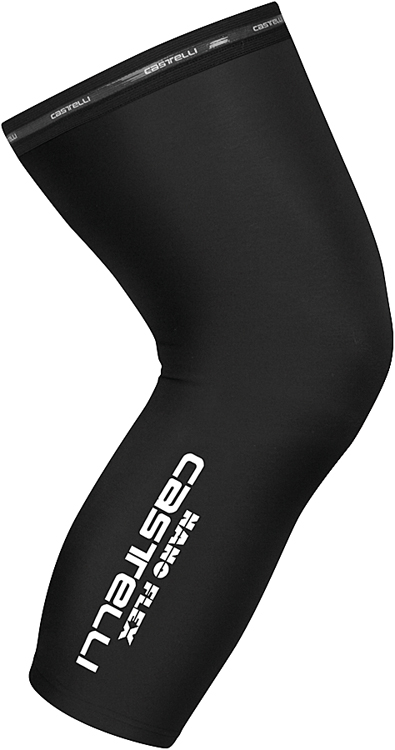
Knee warmers are great for colder days, but when rain also accompanies the cold without an impermeable applied to the skin underneath, the material will get wet and serve to make you colder.
Good fleece lined arm warmers should be enough to keep your arms warm once you get rolling.
Wind-front base layers are invaluable for racing in the cold. This keeps you from having to put a number on your vest and ruining the nylon front.
A little vapor rub on the chest will help keep you warm and some people think it helps open up your breathing for better performance. Like any tip, try this in training before racing.
Lastly, wool socks, two pairs, one for during, and a nice dry pair for right after. It's like a nice warm blanket for your feet. I like to have wool socks of variable thickness in my cycling sock drawer. Note that insulation on your feet can only retain warmth that is already there, and that warmth has to come from circulating blood. Thick socks will make your feet colder if your shoes end up being tight and squeezing your feet. You may want a pair of shoes a half size larger for winter for wearing with your thick socks.
If you have a tendency to get cold, numb toes, consider adding toe-covers or booties to your wardrobe for very cold race days. If you’ll be racing in the rain, test your boots to see that they work when wet.
When you are trying to determine what to wear, keep in mind you should have a little chill while standing around. If you are warm and cozy while standing at the start line, you are overdressed. One solution is to wear an extra jacket to keep you warm on the line, and then toss that jacket to your manager, or support person, or even on the ground.
Once the race gets rolling, the first few minutes until you start to create some body heat will be coldest. Try to find protection from the wind and keep yourself tucked in the pack. The pack will shelter you from the wind and the other working bodies will actually warm the air a bit too. Usually we advise not doing any excess work in a race, but when the choice is having your core temperature drop enough to rob you of your strength, some extra work can keep you in a better position to match an attack or hang on on a hill.
Finally, keep a good attitude. If you believe that you are well prepared and can ride well in the cold, you have a leg up on riders who are more aware of their own suffering. Good luck. In a few months you’ll probably be wishing for a cold day again.
Photo source: Ronde Van Vlaanderen (Tour Of Flanders) public Flick'r album. All rights reserved.
Location: Belgium. Date: 1st weekend in April. The scene: 20% of the country is watching a one day cycling classic on the telly. Cobbled climbs, crazy long distances, rabid fans out in the rain in a rugged event that most will not finish. Arguably the single COOLEST EVENT in all of cycling:
Q1. Defending champion Fabian Cancellara (Leopard-Trek) of Switzerland is the odds-on favorite to triumph again at the 2011 Ronde. The last riders to win this immensely challenging race back-to-back were Quick Step Belgian teammates Stijn Devolder in 2008 & 2009 and Tom Boonen in 2005 and 2006, which wrongly lends the impression that repeating here happens frequently. It does not. Prior to “Tommeke” and Stijn, who was the last back-to-back winner here?
Photo, left: Tour of Flanders 2010. Fabian Cancellara won the race and had enough time to pick up a Swiss flag from the crowd as he rode to victory.Source: Ronde Van Vlaanderen (Tour Of Flanders) public Flick'r album. All rights reserved.
Q2. Flanders features a long gradual descent to the finish in Meerbeke and was a natural for the first use of a 12 tooth cog. Now an 11 tooth is standard for well-trained riders on lighter, stiffer, and more aerodynamic equipment but then it was a revelation, homemade in fact, and instrumental in a solo victory. Can you name the year and the rider of this technological breakthrough?
Q3. Only one rider won the Tour of Flanders and the now defunct World Cup Competition in the same year. Can you name him?
WAS I RIGHT?
A1. Belgian Eric Leman in 1972 and 1973
A2. 1987, Claude Criquelion…a Walloon, who using a “secret equipment weapon”…a 12 tooth cog, broke away on the flat after the Bosberg because he “knew which way the wind blew” and wanted to be alone in a big gear! He incidentally also won the 71st edition wearing race number 71!
A3. Belgian Johan Museeuw in the year 1995.
Photo, right: all signs point to an exciting race. Source: Ronde Van Vlaanderen (Tour Of Flanders) public Flick'r album. All rights reserved.
For more fun trivia contests, exclusive sales, product reviews, and the latest cycling-related news, follow us on Facebook.
Team Garmin-Transitions and Cervélo Test Team have joined forces for the 2011 season to create Garmin-Cervélo, a new team that will build on past successes and expects to produce incredibly exciting racing this year. With a stacked 2011 roster that includes pro cyclists Christian Vande Velde, Dave Zabriskie, Tyler Farrar and World Road Race Champion Thor Hushovd, Team Garmin promises to grab headlines--and sweep podiums--throughout the racing season.
With a promising showing at Tirreno-Adriatico and high expectations placed upon him for the Spring Classics, including Milan San Remo, Tyler Farrar might well be on his way to his best season yet. But let's step back for a moment and recap the some of the most memorable moments that brought him to this point.
Tyler Farrar talks with Heidi Swift about racing in Europe.
Farrar visited Portland, Oregon one dark and rainy evening this winter to celebrate Upper Echelon Fitness's Grand Opening in November 2010 and be interviewed by fellow bike racer and wordsmith Heidi Swift. BicyclingHub had a front-row seat (literally) for all of the action and is pleased to bring you some of the highlights.
What win meant the most to you this past 2010 racing season? "It's hard to pick one--especially since Grand Tour wins are so hard to come by."
Three of his top favorites include:
1. My second win in the Giro de Italia, because it was the best team lead-out my team has ever done.
2. The closing stage of the Vuelta de Espana: it was a pretty significant win in Madrid.
3. Getting 5th in the Tour de Flanders. It was rainy hardman stuff in general...but an EPIC day. Living in Flanders, racing close to home is always special. It is the coolest race of the season.
Farrar recounts the rocky start to the race and crashing 120K miles in, only to later be clipped by a car. "On the deck for the second time, I thought, no way I'm still in the race at this point.' But our Team Director said, 'DON'T QUIT NOW.' Adrenaline took care of the bumps and the bruises. I Owe a big thank you to Matt White; getting a Top 5 in Flanders is one of the high points on my resume."
What can fans look forward to for the upcoming season and the new Garmin-Cervelo Team?
"In the Classics it's such chaos and luck is such a factor. the more strong guys you have the better off you are....The more numbers you have, the better off you are."
With Thor Hushovd coming on board, Garmin-Cervelo have two really big sprinters on one team. Farrar's perspective on the team dynamics and how this shapes their overall program? "It gives us the potential to be winning two races at the same time in different places; for most of the other I'll go to one race and he'll go to the other, and hopefully we'll both be winning."
"We also have Heinrich [Haussler]; Heinrich's one of the most naturally talented riders in the world. He can do anything he sets his mind to. [Given recent crashes] he might not focus so much on sprinting, and focus a bit more on being an attacking/ breakaway rider, which he's also won Tour stages and other big races as."
"On paper, we'll be the strongest Classics team in the world...We have so much depth in our team that any scenario you can think up for a bike race we have a rider where that's the ideal scenario for them to win. I think it should work out to a whole lot of victories."
Major Goals for 2011? "I like to break the season into chunks, or blocks."
1st chunk: the Classics 2nd chunk: The Tour [de France] 3rd chunk: the Vuelta and World Championships
"Also, whether I do the Giro or California, which I don't know yet...But until I finish Paris Roubaix...I'm worried about being the best I can be in the spring. The Classics don't change; the races you want to win stay the same. That stretch from Milan-San-Remo thru .,... Gent - Wevelgem, Tour de Flanders, Paris Roubaix..."
His crown jewel? "The Tour de Flanders is, for me, the most beautiful race in the world. I don't know if it's a race I can ever win. I've been top 5 there this year but being 5th place and winning is definitely two different things. but it's definitely my favorite day of racing. I'd love to be good there.
"I think races like Milan-San-Remo and Gent - Wevelgem probably suit my characteristics as a rider a bit more. they actually can be won in a field sprint so those will be very important but the beauty of the classics is because you're completely fresh for each one so you can give 110 % to every one. You can hurt yourself pretty badly and be full gas again a few days later..if you can win one it's a pretty successful year already."
On Doping One of the audience members queried, How does it adversely affect the sport? and how much does it distract you from doing your job?
"It's something we're all aware of as cyclists. it's an issue that the sport faces; it's an issue EVERY sport faces. from a publicity standpoint it's for the bad, but from a sporting standpoint, it's a good thing b/c cycling DOES face it right up front and we fight it harder than any other sport. the "downside" [gesticulating air quotes] of fighting it is that we have scandals. if you don't do drug testing you don't have any positive tests--ala football [audience laughter] so that's the thing. a lot of sports chose to push it under the rug. We don't. We do everything in our power to clear it out.
Tyler signs a 2010 Garmin-Transitions jersey for Doug Duguay, Owner and Sales Manager of BicyclingHub.com. We will be auctioning off this very jersey to support the 2011 Portland Tour de Cure, to benefit the American Diabetes Association. The value will go up if/when he wins a stage at the Tour!
"It's human nature to cheat...the good thing is they are catching these people. That shows the anti-doping testing is working. It's a sport that has a long history of doping sadly in the last decade though it's a sport that's been turning itself out to change that culture. We've made a lot of progress--obviously, we still have a way to go...but you can't change it overnight...You have to fight it; as they make better and better tests, they're going to catch more and more of the guys that are cheating. And we're going to have to deal with a few of these scandals to make it happen. But these are the scandals that are the watershed moments in the sport that really changes things.
"Before the Festina scandal in 1998, no one really cared; Operation Puerto scandal was the next moment where anti-doping went to a whole new level. It's all a work in progress. I really think it's cleaning up a lot.
"You take my team [Garmin-Cervelo]: we were one of the first teams to come out and say, we are a clean team. We're going to do in-house testing on top of any UCI or WADA or whatever governing body testing. It was an interesting position to stake out at the time. A lot of people said, 'This will be an interesting test of how clean cycling is: if you have a completely clean team, how well are they going to do?' And we were 5th or 6th in the world this year. And I think that's a pretty good indication of how clean the sport is.
Farrar's sage advice on the matter: "You know it's there, but you'd go crazy if you worry about it; it becomes a crutch. The biggest thing: worry about YOURSELF, not 'what's that guy doing?' It's not my problem...I'll worry about my own training."
March roared in like a lion just in time for season opener for “The Classics Season” with the Belgian Cobbled Duo of Het Nieuwsblad (formerly Het Volk) and Kuurne-Brussels-Kuurne. KBK is of special interest to American cycling fans as it is one of the few Classics won by an American--George Hincapie--in 2005. In an exciting field sprint, Tyler Farrar came close this year. It is, remarkably one of the few races never won by the great Eddy Merckx!
This month we focus on a slightly more obscure Belgian Classic, founded in 1945, but one that since 2005 has been designated UCI 1.1 and is thus hotly contested by all the World’s Best Teams: the Kuurne-Brussels-Kuurne. (Photo left courtesy of Flickr.com.)
Q1. Like all of the Belgian Classics, knowledge of home roads in paramount in these winding, twisting, cobbled, windy, and often treacherous roads. Thus, the home nation has won the most editions. However, in the last decade, Belgians have triumphed ONLY THREE TIMES and WITH ONLY TWO RIDERS. Name them!
Q2. As mentioned, in the introduction, Belgians tend to dominate their home Classics. In KBK, so much so that in the first THIRTY-FIVE years of this event (1945 to 1979) only ONE Non-Belgian triumphed here! Can you name him and the year of his victory?
Q3. Who was the first back-to-back winner of KBK and when did he achieve this? HINT: He is one of the few riders in cycling history to have triumphed in ALL FIVE of the Monuments!
WAS I RIGHT? Answers below.
A1. Nick Nuyens (2006) and Tom Boonen (2007 and 2009). With Two wins, Boonen is part of a group of twelve quite elite riders to have triumphed here twice, and no rider has ever won three KBKs.
Back in the U.S. with stitches in her side and a hunger in her belly, Butler talks candidly about riding, racing, and pursuing your dreams
“It was like a punch in the gut. The funny thing was, while sobbing in the ambulance, my first thought was about everyone else. Everyone who supported me to get there and how I let them down. It really wasn't about me. It was somewhat unbelievable. I think I was in shock for a while. I have never crashed so hard that it took me out of a race. So, I was bummed. Pissed…I hate being hurt, but I am also thankful that it wasn't worse. I could have broken my hip or bones and then I would have had a nice extended stay in Sankt Wendel [Germany]. That would have been bad.” ~Sue Butler on the course-altering crash that ended her bid for a 2011 World Cyclocross Champion title
Of course, if Butler were a practical soul, she never would have been there in the first place. Reflecting back on her decision to quit her full-time job as a guidance counselor with the Portland Public Schools in 2005 at age 33 and strike out to become a professional mountain-bike racer, Butler candidly admits, “I was crazy to think I could do it. I had no history of racing. I don’t know what I was thinking…all of a sudden I was going to quit my job and pretend to be a racer? “
There aren’t many instances in life when our significant other reminds us of our advancing years that the conversation ends well. However, in Butler’s case, it proved to be just the push she needed. “My husband [Tim] said, ‘You know what? You’re not getting any younger. You’re fast and you’re good. You won’t know unless you try. You won’t know unless you give it your 100% and see if you can do it. The worst thing is going to happen: you’re going to try it, you’re going to suck, and you’re going back to your job. BIG DEAL.’ At least you know, and you’re not going to sit in that office ten years from now and think, God, I had an opportunity, I could’ve been a professional mountain-bike racer…I didn’t want to have to say WHAT IF. I had this opportunity and I didn’t take it and now I’m miserable. Man, I should’ve done it when I could.”
With that spirit of determined ferocity and ambitious optimism, Butler set out on her chosen path. Temporarily waylaid by a skiing-related knee surgery the following February, a short 5 months later she won the 2006 National Mountain Bike Championships, 35-39 Expert division, in Sonoma, CA. What had seemed like a setback at the time turned out to be a blessing in disguise: “If I had turned pro [that year] I never would have been able to win a national championship at that level. It was such a huge accomplishment after going through all that rehab.” From there, she went on to win the 2006 TransRockies Challenge with Barenaked Cannondale team member Anna Vacca, and began “dabbling” in other endurance-challenging events such as the Salt Lake City U100 (100 mile MTB race), the Canadian Masters World Championships and, of course, cyclocross.
WHY CYCLOCROSS?
When asked to pinpoint her favorite discipline, Butler and fellow racer Wendy Sims agree: “I like riding my MTB the best but I LOVE racing cross. It’s finite; you know how long it’s going to be: 40 minutes of pain. You can suffer for 40 minutes. You can put your body in that discomfort for that long.
“There is some strategy in it; it’s technically challenging enough, but you know it’s going to be over soon. [The course is] a proscribed thing; you go over and over again so you can improve your lines each time you ride it. And you can pre-ride, so you can kind of know what you’re getting yourself into. You’re racing twice in a weekend most of the time, so if you really have a bad race on Saturday, you can do something different and improve it on Sunday. ‘What did I do wrong? What could I have done differently?’ Most of the time [with mountain-bike racing] it’s ‘one and done.’ And if I really screw up a cross a race on Saturday I can try and do something different on Sunday and say, okay, that worked."
Representing Hudz-Subaru for the 2010-2011 cross season, Butler set--and reached--some pretty ambitious goals for herself this year, including podium finishes at the USGP in Portland, Cyclocross Nationals in Bend, and qualifying for 2011 World Championships. Done, done, and done. Plagued with asthma and health issues and unable to compete at Worlds the year prior, she was determined to come back this season more competitive than ever. Despite the unfortunately-timed crash in St. Wendel, Butler is able to take a more macroscopic view of her overall accomplishments. “I knew I was on the right track in Vegas when I made that front group, even though I didn't quite have the fitness to stay there. Then in Madison on the second day, I found myself on the podium at the USGP. As the schedule went, I was unable to be in Louisville and then got sick for the next round in Colorado, but then in Portland on the first day, I accomplished my goal.
“It was good to be back. So, although the season didn't really go 'as planned,' with a sinus infection taking me out for a few weeks, it was good. Something to build on and improve for next year. As for my proudest moment, I have to say that making that podium in Wisconsin with my family all there was pretty cool. My mom is pretty cute about all this. And my 15 year old niece was impressed. That is hard to do. But podium in Portland in front of the home crowd was almost as sweet.”
HOW TO RIDE LIKE A PRO
Winning races as diverse as the High Cascade 100 MTB Race, short track and cross country OBRA Championships, and 40 minute ‘cross suffer-fests, you’d think Butler must have been born the uber-fast and furious pro with a VO2 Max that rivals Lance Armstrong’s. Not so, says Butler. “It’s taken years on some of those trails to be able to clear; it didn’t start overnight. I remember walking thing that I don’t even think about now. [Being teased] ‘I remember when you couldn’t hop a log’; in Forest Park I could not get over a little 6” bridge—I didn’t know how to get my bike over it. “
What were the tools that unlocked it for her?
“Determination. I want to be able to do it. And I know it’s possible. You see other people do it. And I think that’s important: knowing it’s possible. All those sections that I can ride now: After the first time I did them, I’ve never NOT done them again. Because you know what? Now I can. But it took riding someone behind that did it fine and then you know it’s possible and you can do it yourself. So I always ride with people that are better than me. That’s how I got faster; that’s how I got better technically.
"Doing the BC Bike Race improved my skills amazingly technically-wise because the trails up there were difficult and it was scary and there were things I would not have ridden on a joyride; but racing, you don’t have a choice. And I think racing has made me a better rider and a better athlete because it puts you in a position where you don’t have a choice.”
When asked whether not having a choice might put a rider in a potentially dangerous position with un-alterable consequences, Butler pauses for a moment before responding: “Adrenaline is an amazing thing; yes and no. But I think it allows us to accomplish things we don’t think we’re capable of…You know, you’ve got to ride within your skill abilities …I have the fear of riding over skinnies and little bridges—I’m freaked out by it. Well, singletrack’s only that wide. Well, I can ride that, why can’t I ride [this]? I mean, it’s stupid. I should be able to ride it. And guess what? If I was racing, and you want to beat the people behind you, and you have a partner in front of you riding it, then are you going to walk it? NO! You’re going to ride it. It’s amazing the things you can ride when you’re following someone that’s good and skilled. It’s pretty inspiring.”
On overcoming fear:
“Even for me I have to get past that [fear of crashing] because 99% of the time you’re going to be fine. So you really can’t focus on that slight, slight, slight chance that something bad is going to happen. You don’t want to live your life out of that fear; fear is one of those emotions that will paralyze you forever and it will not let you continue to let you do what you love. “ Showing off the well-earned battle scars along her elbow after opening up her arm three times in one season, she continues. “Yeah, it’s ugly and it reminds me of those crashes…and makes you laugh too. I don’t even think about it now. I LOVE going downhill on my MTB; I LOVE rocks and just rooty stuff.”
Her best advice: “Practice makes perfect; hone those skills, so you can be confident in going down something. If you’re going to be scared you’re going to be walking a lot. I HATE walking my bike. My objective is to get better and get over those things b/c I really don’t want to walk my bike…I love riding it, and I love the challenge of it! I think that’s why I keep doing it.” Another skill set that’s served Butler well in both the cross-country mountain bike and cyclocross arenas? Her ability to re-set and go. “You’ve got to be able to do that [re-set] and not let things like that stay in your head and totally plague you. Because you won’t do well [otherwise].
“I remember the first year I went to Worlds, at the USGP Portland 2007. The race was horrible; bad; not a good day. I was plagued with mechanicals, it was muddy…shaking and freezing cold. I was so determined to do well. Bad bad bad…I was sitting in the Tahoe shaking crying sobbing –okay it’s a race why am I crying”? -- It was so emotional because I was ready to kill it and I didn’t. I was like, 'There goes my chance to go to Worlds and I really screwed it up.’ It wasn’t my fault; I couldn’t have done anything differently. But I reset, went to Kansas got 6th at nationals and ended up going to Worlds. You have to always be determined; you should never give up you shouldn’t write off your chances.”
A “Late Bloomer”
With a race career and backstory this impressive, and elite-level results no one can argue with, it’s dismaying to learn Butler’s biggest barrier isn’t a 2 foot log in the middle of the trail or a brutal run-up so muddy cyclists are losing their cleats in the brine, but her age. A self-described “late bloomer” to the pro circuit, the chase for sponsorships and professional opportunities has been a difficult quest. Racing first for local bike shop River City Bicycles, Barenaked Cannondale and then Monave Cannondale, Hudz-Subaru picked her up for the 2010-2011 cross season but the future remains unwritten and unknown. “Since I didn’t start racing until so late I still feel I have several good years left in me. There’s something about young development, new and up-and-coming, blah blah blah…But even when I had my first good season, it was impossible. It’s been really hard as someone who’s started late in life to get sponsors. So it’s frustrating.”
Pair that with another national trend: the lack of junior and U23 development programs, sponsorships, equal prize dollars and race opportunities for women—and it’s an uphill battle. Having raced throughout the U.S., Butler comments on the lack of equal participation she sees in the sport: “I don’t think a lot of women are encouraged, and I think a lot of women don’t know that the opportunity exists to race your mountain bike. There’s probably a lot of mountain-bikers out there that have no idea there’s mountain-bike races. I didn’t know that; I had no idea. I think woman are really competitive and I think they can handle pain better, too….[But] women are more practical. They’re not going justify spending money on themselves to race, whereas men are like, ‘whatever; I’m going to go do that race.’ Women are more sensible that way."
Another good reason? Women in their late 20s and mid 30s are starting families, and a different set of priorities come into play. While men can choose to still race, women who are pregnant, nursing or performing childcare duties unfortunately takes some women out of field—at least for a time period.
It’s Never Too Late to Start
At age 38, Butler is competing—and winning—against elite women 10+ years her junior, and can honestly tell you she’s in the best shape of her life. Ironically, in part due to the aforementioned encouragement, funding and priority discrepancies when it comes to the junior development and U23 teams for women, she “I couldn’t have raced as a U23; I couldn’t have afforded it. Unless you have racing in your family; or you have somebody in your life that’s willing to do that for you, how are you going to do it? There’s probably a lot of talent in this country we’re never going to know about because guess what? We’re never going to tap into it. And it IS expensive. We have to be honest about that.”
Despite prior health setbacks, bad crashes and sponsorship issues, Butler remains an optimistic ball of positive energy, radiating her passion for bicycling to everyone she comes into contact with. More than anything, she wants cyclists to eradicate “I can’t” from their vocabularies. “It IS something they can do. They do have the fitness and the ability. We have a tendency to say, 'Oh, I’m not good enough to do that.' Oh no, you are, you definitely are—you just have to want to do it and you have to do it.
"I started really late in life compared to most people but it doesn’t mean you can’t be competitive. It’s hard work, but it doesn’t mean that it can’t happen…You don’t know it unless you try. I think people have this concept that they’re not good enough. NO, YOU ARE. And unless you go do it, you’re not going to know how you stack up against the rest of the country.”
Hunger in Her Belly
What’s going to keep Butler hungry for more in the upcoming season? “I haven't gotten to where I want to be. Racing in Europe this past year was like a step back. I need to master the starts and have better races over there. And although I did podium at nationals, it wasn't a clean race. Wasn't my best race. I want to have more races next year that I walk away from and say, YES! I gave it my all and got the best result I could have. I didn't have as many of those as I would like to have. I have to fix the little mistakes and there is still lots of room for improvement. I am already looking forward to it.”
“I love riding my bike, “she says simply. “That’s basically what it boils down to. What ever I’m doing, I’m going to make sure I do it 100%