26 July 2011

Form and Function: A Clothing Buyer's Guide for Women


Imagine BicyclingHub's surprise when we opened our July 2011 issue of Velo News and discovered some of the products we carry were featured in their Women's Gear Guide! That's great news for the more than 16 million women in the U.S. ride road bikes looking for performance-enhancing apparel built with the female figure in mind. Below are some of the highlights, showcasing some of our favorites found on BicyclingHub.com.


Form and Function: A Clothing Buyer's Guide
by Rebecca Heaton

When it comes to cycling clothing, women have a dizzying array of options to choose from. To help with all the choices, we selected short-sleeve jerseys and shorts in small, medium and large sizes from 10 different companies. Then we gathered a group of 10 female cyclists of all interests, shapes and sizes — several road racers, a few casual triathletes, and a number of women who enjoy putting in serious miles at endurance events, century rides and multi-day bike tours — to try everything on and give their feedback wearing the clothes both on and off the bike.

WHAT OUR TESTERS LOOK FOR IN A JERSEY

COLOR AND PATTERN: Fun colors and prints, but nothing transparent or frilly.

FIT: Tight, but not too tight. The jersey shouldn't slide up and expose skin.

FABRIC: Soft, light, breathable fabrics are best, nothing scratchy.

POCKETS: Three pockets — a small zipper pocket for key and cell phone is a bonus.

BOTTOM BANDS: Minimal elastic, as tighter band tend to slide up on women with an hourglass figure.

FRONT ZIP: Three-quarter to full-length zippers.

WHAT OUR TESTERS LOOK FOR IN SHORTS

WAIST BAND: Wider, softer bands and those that drop down a bit in front.

LENGTH: Nothing too long, although longer styles offer better compression.

FABRIC: Strong and thin, but not flimsy or see-through.

LEG GRIP: Need a gripper in the leg band, but not too grippy or sticky, and not so tight as to cause sausage legs.

CHAMOIS: Soft and comfortable, but not bulky.

STITCHING AND STYLING: Flat stitching is a must, and subtle style touches are welcome; basic black is still the most popular.

BIB VS. NO BIB: The jury is out; interesting option, but bathroom stops remain a challenge.

BODY TYPES

In the clothing descriptions, we note which pieces fit these four body types:

P PETITE BUILD: 5'2" – 5'4", chest (30"–32"), hips (32"–34")

B BROAD BUILD: 5 '4" – 5 '7", c hest ( 36"+), hips (39"+)

M MEDIUM BUILD: 5 '5" – 5 '7", chest ( 32"–36"), hips (34"–38")

T TALL BUILD: 5'8" – 6', chest (33"–36"), hips (33"–38")

Pearl Izumi Ultrastar Women's Cycling Jersey

"Designed with a semi-form fit, this jersey uses wicking, textured fabric with UPF 50 protection. Three back pockets offer up great storage for clothes and snacks, and a few reflective hits keep a rider visible early morning or when the sun sets."

PROS: Well constructed; great color and design; comfortable fit; good pockets; good value

CONS: A bit heavy for warm days; styling best for recreational riding

BEST FIT FOR: Petite, Medium, Broad builds. A bit too short in torso length for Tall builds.

Pearl Izumi Women's Elite Drop Tail Cycling Bib Shorts

"These shorts live up to their name with a unique “drop tail” flap in the back to make bathroom breaks easier. Made with a soft and breathable UltraSensor fabric in a multi-panel design, the Drop Tail features a seamless ELITE 3D Chamois, which is antimicrobial, breathable and padded in just the right places."

PROS: Great mesh in the bibs; soft, breathable fabric; comfortable, padded chamois; nice flatlock seams.

CONS: Drop tail flap — it works, but it's awkward.

BEST FIT FOR: Petite and Medium Builds. Bib didn't fit longer torsos well.

Descente Women's Aero-X Cycling Shorts

"Made with Descente's Aero-X fabric, a blend of nylon and spandex, these shorts provide great compression and stretch on long rides. An elastic-free waistband makes for a comfortable fit at the waist, and the women's lightweight Stealth chamois is antimicrobial and breathable."

PROS: Comfortable waistband; simple styling; no-nonsense chamois; well constructed, form-fitting fabric.

CONS: Overly simple styling; no leg grippers.

BEST FIT FOR: Petite, Medium, Broad builds. Too short for Tall tester.

Castelli Perla Women's Cycling Jersey

"Made with Castelli's Softlex fabric, this jersey feels like soft cotton and is wicking and form fitting with seamless arm and neck bands, each with a nice hit of color. The full-length zipper allows for maximum venting, and the plethora of pockets — three elastic and one zip — allow for plenty of room to store ride necessities."

PROS: Comfortable fit; soft fabric; well constructed; classy, feminine styling; trim detail matches shorts; good pockets.

CONS: Poor fit for longer torsos.

BEST FIT FOR: Petite, Medium, Broad builds. Too short for longer torsos.

22 July 2011

"No Guts, No Glory:" Schleck and Team Leopard-Trek Grab Yellow in an all-out battle to win the Tour


Photo source: versus.com

"No guts, no glory" is what Team Leopard-Trek's Andy Schleck told reporters yesterday at the end of Stage 18 of the 2011 Tour de France after his team's meticulously executed plan to break early with 60 km of serious climbing to go netted him the stage win and put Schleck within spitting distance of the yellow jersey, narrowly held onto by Europcar's Thomas Voeckler. Frenchman Voeckler gave the performance of his life as he sprinted to an uphill finish atop Galibier to retain the leader's yellow jersey for a 10th stage win, and Team BMC's Cadel Evans stamped out his determination with his every pedal stroke not to let his bid for the maillot jaune slip through his fingers.

The excitement continued in today's "hillier than thou" Stage 19 climbfest, ending with a guns (and legs) a'blazing battle on the road up the fabled Alp de Huez.

Breaking sports news video. MLB, NFL, NBA, NHL highlights and more.


Voeckler's fellow Frenchman and Europcar Pierre Rolland escaped the pack to achieve an important stage win at the top of Alp de Huez, while Andy Schleck took over the yellow jersey from Voeckler as leader of the 2011 Tour de France. Schleck enters Saturday’s critical final time trial with a 57-second gap ahead of Evans, a noted time-trialist, while defending champion Alberto Contador from Team Saxo Bank sits nearly four minutes behind Schleck in 6th place overall.

Will Andy find his wings?

[Photo left: Andy Schleck raises his arms in thanks after winning Stage 18 on the mountain-top finish of Galibier after a long solo effort. Source: Team Leopard-Trek.] When asked whether he'll be able to hold Cadel Evans at bay in the 40km time trial stage tomorrow and ride into Paris as the Tour Leader, Schleck replied, “The yellow jersey gives you wings and I hope that is the case tomorrow.” We'll know for certain tomorrow at the conclusion of Stage 20…But in the meantime, BicyclingHub.com thanks Andy the Team Leopard Trek for providing one of the most exciting Tours to watch with baited breath in a long time.

Cheer Andy on to victory with an official Team Leopard Jersey or Team Kit!

Team Leopard-Trek boasts some of the strongest riders in the world, from the animated Fabian Cancellara to Stuart O'Grady and Jens Voight the lanky Luxembourgers Frank Schleck and Andy Schleck and newcomer Jakob Fuglsang. If you are a fan, then this official team replica kit is a must have.

Look sharp, look fast - and be inspired to ride a little faster too!
Lightweight fast-wicking fabric and breathable fabric ensures your comfort whilst emulating your riding heroes. A full zipper helps with extra ventilation and three pockets in the rear are waiting to be filled with your onboard essentials. A 4th zippered pocket/compartment is useful for that front door key or enough change for extra refreshments along the way perhaps. Order yours today with BicyclingHub.com and get free and fast standard shipping and prompt delivery.

19 July 2011

When did you know you were passionate about cycling? Scott Richardson can tell you.

A Guest Blog article by Scott Richardson
Outdoor editor/staff writer for The Pantagraph, Bloomington, IL

A bike saved my life. That’s not said to be dramatic. It’s true.

I was 54 in 2005 when I saw a picture of me that left me speechless. I avoided the camera most of the time because I weighed nearly 400 pounds. But there I was.

Huge.

The truth couldn’t be avoided any longer.

At the same time, some members of the local bike club came to my office at the newspaper where I write outdoor recreation/adventure/travel stories. They were launching a local effort modeled after Bicycling Magazine’s Bike Change Lives Giveaway and wanted my help. They would give three people bikes if I would follow their progress toward their fitness goals.

I loved bike riding as a kid, but the driver’s license and girls and killed the passion. So I decided I’d get a hybrid bike and join in. I had to have a heavy wheel built to handle my girth without breaking spokes. But I joined group rides with thin people in spandex and rode my tail off – literally. I rode 3,500 miles that first year. By 2006, I’d lost more than 100 pounds. I went to the doctor for a long overdue exam. Fat people do not go to doctors. Why pay money to hear, “You’re grossly overweight. Lose it.” ? One test led to another until cancer was found. No doubt, the tumor would have gone undetected until symptoms developed were it not for the weight loss from the bike. As it was, the disease had not spread. Surgery was scheduled.

The McLean County Wheelers have an annual Big Dog contest where members log their miles and report them monthly. I was just 17 miles short of 3,500 for the year when the sun came up on June 22, the day I was to have my operation. Rather than sit home and fret, I got on my bike – by now a Giant TCRc1 road bike – and pedaled off. I got that 17 miles and more, thinking about how much my life had changed as a result of two wheels.

Afterward, I borrowed a recumbent and started to ride within a few weeks. A few weeks later, I was back on the road bike. In 2007, I rode my first bike race in a triathlon relay for LiveSTRONG. I was chosen to attend the LiveSTRONG Challenge in Austin that fall thanks to a web site devoted to Lance Armstrong’s team. I rode for that relay team again in 2008, all the while losing more weight. In 2009, I did my first full triathlon. In 2010, I did my first half Ironman. I’m training for IronMan Wisconsin on Sept. 11, about two weeks shy of my 60th birthday.

I was pronounced five years cancer free on June 22 of this year. The odds of its return are virtually nil.

The bike changed my life in another way. I got an email in 2006 shortly after my surgery from a lady who read my articles on cycling and how it helped me. She wanted help in choosing a road bike. At the end, she mentioned in passing that we had gone to high school together in a small town not far from where the newspaper is published. We rode together. She even finished a couple of centuries with me. We were married in 2008.

[Lance] Armstrong said, "it’s not about the bike," and he was right in a way. It’s about where the bike will take you. It can take you as far as your dreams.

14 July 2011

Funding for bicycling and walking is in jeopardy: speak out TODAY!

Your favorite road or trail network may soon be on the endangered species list. Join PeopleForBikes, the League of American Bicyclists, and the International Mountain Biking Association (IMBA) in contacting your elected representatives TODAY and urge them not to cut these critical transportation, safety and recreational trails programs.

Last week, Congressman John Mica of Florida, Chairman of the House Transportation & Infrastructure Committee, outlined his plans for the new transportation bill and called for the elimination of dedicated funding for biking and walking programs, which he suggested, “do not serve a federal purpose.”

In the Senate, James Inhofe of Oklahoma is leading a similar attack. Inhofe, a senior member of the Environment and Public Works Committee, said that one of his top-three priorities for the next multi-year federal transportation bill is to eliminate “frivolous spending for bike trails.”

If Representative Mica and Senator Inhofe get their way, dedicated funding for three crucial programs -- Safe Routes to School, Transportation Enhancements, and Recreational Trails -- will be eliminated. We can't let this happen. Send a short email today to your members of Congress asking them to support ongoing, dedicated funding for biking and walking in the next transportation bill.

Suggested Talking Points (courtesy of peopleforbikes.org):
  • The federal investment in biking and walking is cost-effective: 1.5 percent of transportation spending supports the 12 percent of all trips that are made on foot or bike.
  • Biking and walking need continuing, DEDICATED federal funding. If bike/ped programs are simply eligible for funding and the decisions are left to individual states, key programs will be decimated.
  • More than 4 billion bike trips were made in the U.S. last year—a record.
  • Portland, Oregon built a 300-mile network of bike lanes, multi-use trails and bike boulevards for $60 million—the cost of one mile of highway.
  • The federal investment in biking and walking supported more than 3,000 projects and programs in all 50 states last year. Reallocating this money to road construction would pay for less than 20 miles of new of new highway in a single location.
  • Investments in biking and walking provide tremendous bang for each buck. Bike infrastructure reduces road congestion and air pollution, improves personal health, and creates and supports good jobs.
Suggested cuts affect trail users as much as road users.

Why does this matter to mountain bikers?
According to IMBA, many of the at-risk federal programs directly help improve mountain biking in the United States. For example, the Recreational Trails Program (RTP) is incredibly valuable — no other federal funding source comes close to creating the trail opportunities that RTP puts on the ground in all 50 states. More than likely one of your favorite trails was funded in part by RTP.

Bicycling and walking are non-partisan issues. Thanks for taking five minutes to urge your Congressional representatives to continue dedicated funding for bicycling and walking, and standing up for cyclists on this important issue.

12 July 2011

Tips for Cyclists on Reducing Risk to Skin Cancer

Guest Blog article by Stephen Dupont, Pocket Hercules

MINNEAPOLIS (July 2011) -- You wear a helmet to protect your head. You wear sunglasses to protect your eyes from dust and dirt. You ride defensively to avoid careless drivers, kids, and dogs.

But more often than not, you, like many who enjoy bicycling, forget to put on your sunblock before you hit the roads and trails.

If you love cycling and want to enjoy it well into your senior years then protect yourself from the sun. That’s the advice for America’s 57 million bicyclists from a leading plastic and reconstructive surgeon who has treated thousands of patients over the course of his 15-year career for skin cancer and melanoma.

As the days grow longer and warmer, and the sun intensifies in it’s strength, cyclists need to take precautions against the sun’s harmful rays, says Dr. Sam Economou, who leads Plastic Surgery Consultants Ltd., a practice located in Edina, Minn., a suburb of Minneapolis.

The reason is simple: skin cancer is on the rise. In fact, according to the American Cancer Society, more than 2 million cases of non-melanoma skin cancer are diagnosed each year. In addition, about 68,000 cases of melanoma, the most serious type of skin cancer, are diagnosed yearly. While more people are detecting cancer earlier, increasing their chances of survival, cancer rates are actually rising, especially among young people who use tanning booths and those who do not use sunblock when working and playing outside.

Cycling is about spending time outdoors. And more often than not, most cyclists enjoy riding their bikes when the weather is nice and sunny. That puts many of America’s 57 million cyclists at risk for skin cancer, says Dr. Economou. The more time you spend outdoors cycling, the greater risk of exposure to harmful ultraviolet radiation and sunburns.

People who bicycle a lot have several strikes against them when it comes to skin cancer, notes Dr. Economou. Because many cyclists ride near their homes, they think they’re not at risk if they don’t put on sunblock -- even for a short ride. The problem is that cyclists tend to expose more skin than other athletes because of the clothes they wear (shorts and short-sleeve shirts). In addition, many cyclists may not realize that water, sand, and asphalt streets reflect dangerous UV rays.

To help cyclists lower their risk of developing skin cancer, Dr. Economou offers these tips:

Apply sunblock. Always apply sunblock lotion at least 30 minutes before going out into the sun, before you start to perspire, to allow the sunblock to be absorbed into your skin. If you think you may remove some cycling clothes during your ride, consider applying sunblock before you get into your cycling clothes. Even if you’re riding at 6 a.m., apply sunblock and reapply it after every two hours you’re outside. Use a sunblock with a SPF rating of at least 30 an arms, legs, face and neck and a water-resistant SPF of 50+ on your nose and the top of your ears. Make sure that your sunblock is effective against both UVA and UVB rays.

Wear a hat. The most susceptible place on your body for skin cancer is your head -- the top of your head, your face, nose and ears. Believe Dr. Economou, reconstructive surgery on the nose and ears is challenging. Cyclists should wear a thin cycling cap underneath their helmets to prevent from being sunburned on the top of their head. Always apply sunscreen to the face, especially the nose and ears, and to the back of the neck.

Polarized UV-blocking sunglasses. Cyclists should always wear sunglasses to protect their retinas from harmful UV rays, as well as dust particles on a windy day. Sunglasses that wrap around your face offer the best protection. Polarized lenses help cut the glare (from nearby water, sand, asphalt and snow) to help you see better during your ride. A really good pair of polarized sunglasses is one piece of equipment in which every rider should invest. They’re just as important as buying a bike.

Wear cycling gloves. Wear gloves specifically designed for cycling. Padded gloves not only make riding more comfortable, they’re essential to preventing nasty scrapes in the event of a fall. Gloves also are helpful in protecting the tops of your hands from sunburn, which is one of the most exposed parts of your body during a ride. Don’t forget to apply sunblock to your hands before putting on your gloves.

Wear protective clothing. If you have a high risk or history of skin cancer in your family you should look into protective clothing. Even on the hottest days, wear lightweight long-sleeve shirts, caps, socks and shorts. Equip yourself with cycling jerseys and shorts that are specially made to block the sun and wick away moisture to keep you cool while out on the road or trail -- apparel that offers a UPF rating of at least 30+, as recommended by the Skin Cancer Foundation, to protect against harmful UVA/UVB rays. Remember, UV rays are present even on cloudy days.

Cycling jerseys, such as the Pearl Izumi Annata White Elite Limited Cycling Jersey pictured here, feature Pearl Izumi's famous moisture-wicking polyester fabric, UPF 40+ protection from the sun's harmful rays, and a form flattering fit. This bold new design also offers Direct-Vent size panels to enhance syle, performance and comfort.

Move your cycling time. Here’s another excuse for getting yourself out of bed at the crack of dawn. It may be more pleasant to wait until the day has warmed up and the sun is shining, but that’s when the sun is at its strongest, and cruelest, in terms of skin cancer. And don’t fool yourself on cloudy or partly cloudy days. Harmful UVA and UVB rays still get through clouds. Instead, shift your riding time to early morning or early evening to avoid the affects of the sun. Just don’t forget to wear highly visible clothing (screaming yellow, orange or lime green) to make sure automobile drivers and other cyclers see you.

Avoid sunburns. Repeated sunburns over time can cause significant damage to your skin. Severe sunburns as a child are a leading risk factor in developing skin cancer as an adult. Sunburns happen though, despite our best intentions. If you do get a severe sunburn, stay hydrated, treat the sunburned area with an aloe-based lotion, take cool showers, and if you’re experiencing headaches, take a pain reliever.


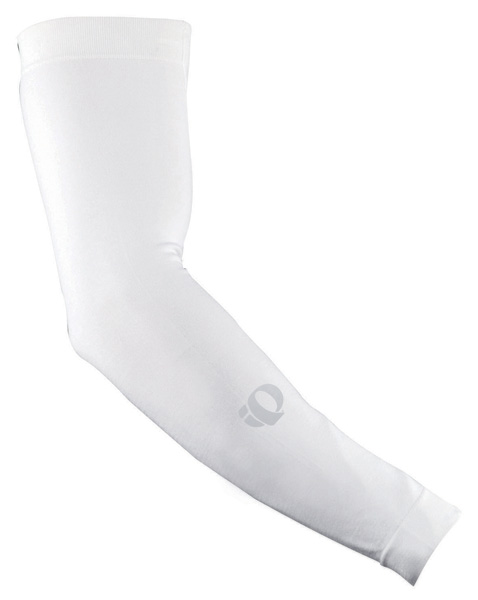
.KEVIN SAYS: Give the Pearl Izumi Sun Sleeves a try!

Having the fair-skinned complexion that comes as standard with red hair, I have to watch myself in the sun lest I should become lobster-man! I tried the Pearl Izumi Sun Sleeves out and found them to be great and much more convenient than applying and re-applying lotion. I guess there is less chance of 'missing a bit' also, and ending up with red patches that might have escaped the lotion. Any concerns about putting on what seem like armwarmers for a hot summer's day soon went away once I started out. These actually did feel cool to ride in and I had no problem leaving them on for my entire ride. I would recommend these highly for anyone looking for sun protection - which I guess should be everyone, right? Be safe out there!

We finally got some good weather in Portland and the mercury was up there in the 90's - well that's hot for us ! Thing is - the hotter it got, the cooler these, and my arms, felt. To add to this - the last couple of days have started out chilly and these did the trick keeping the goosebumps away in the morning. Later on when the sun blazed throught the cloud cover I did not need to take them off and/or apply sunscreen. I am loving my sun sleeves!


Stay hydrated. To maintain healthy skin, don’t forget to stay hydrated while cycling by drinking plenty of non-alcoholic beverages before and during a ride. When your skin dries out or is not hydrated properly, it’s more susceptible to sunburn and long-term skin damage. Water remains the best liquid to drink while exercising. Sports drinks add empty calories.

Conduct skin cancer self-examinations. If you have a fair complexion, multiple freckles and moles, and experienced severe sunburns as a child, you have some of the leading risk factors for skin cancer. Take this seriously, especially if you spend a fair amount of time outside cycling. At least once a month, before you get into or just out of the shower, look at your
skin. Look at moles and freckles to see if you notice any changes in their shape, size, color or asymmetry. Make an appointment once a year with your doctor or a dermatologist to look at your skin as part of an annual exam. Especially watch moles and freckles on high-risk areas of your body, the face, nose, ears, the back of your hands and your calves.

27 June 2011

Unsure about sizing or brands? Call the cycling clothing experts!

BicyclingHub.com Staff Sizing Guidelines

Need help finding your correct size? All our staff ride in and vigorously test the products we sell. Call our cycling clothing experts toll-free at 1-888-817-8060 or email customerservice@bicyclinghub.com for guidance. OR chat with one of our cycling clothing experts live and in person from the comfort of your keyboard via our new LIVE CHAT feature on BicyclingHub.com. It's easy: just look for the LIVE HELP option on the left-hand column of any page, click "Start Chat" and type your question at hand in the new window.Our customer service representatives would be glad to help you get into the right-sized garment the first time around.


DougDoug wears:
Weighing in at 215 lbs and measuring 6' 2", my husky build had my father rooting towards football rather than bike racing in my teenage years. Over two decades later, my passion for cycling has never wavered. I tend to wear my cycling apparel a bit snug to retain that Euro-racer feel: in Italian designers such as Giordana and Castelli, my brand of preference, I typically wear a size 2XL jersey and size XL bib shorts. In Pearl Izumi, Descente and Primal Wear, which offer a more relaxed cut, a size XL jersey and size Large bib short fits me well. When it comes to Retro Image Apparel and Micro Beer Jerseys, If I'm looking for a snug fit I'll opt for a size XL jersey; if it's a slightly more relaxed fit I'm desiring, I'll choose the Size 2XL. And in Showers Pass jackets, Size XL fits best all-around.

It's widely known around the office I'm a bit "obsessed" with bib shorts; I haven't worn a pair of regular cycling shorts since 1998! I prefer wearing my bibs a little tighter than most recommend, as I find most bibs stretch slightly over time and I can't stand feeling the chamois pad moving around while on the saddle. In addition, I like the shorter leg length, and it helps even out those well-earned tan lines =) When it comes to my favorite chamois pad, I really like both the Castelli KISS 3 and Progetto X2 chamois; often times, it doesn't feel like I'm wearing anything at all.


KevinKevin wears:
At 6' 4", I typically wear size Large in American-cut brands such as Pearl Izumi in both jerseys and bib shorts; a size XL in brands like Giordana, Retro Image Apparel, and Primal Wear; and size 2XL in European-sized brands such as Castelli, in both their regular and Rosso Corsa lines. For tall and lanky fellows like me, I've found Castelli's race fit jerseys (i.e., Team Garmin-Cervelo or Castelli Punto) with inset sleeves in a size 2XL, or Castelli's raglan-cut jerseys (i.e., Arrivo or Prologo HD) in size XL, to fit best. Due to my height and tapered frame, Castelli bib shorts in size 2XL fit best.


CrystalCrystal wears:
At 5’ 5", roughly 130 lbs--depending on the season--and a track build (bootylicious!) this runner, cyclocrosser and triathlete puts her gear through a lot of wear and tear. I always run with a size Small in Pearl Izumi jerseys, bibs and skinsuits. In Giordana, a size Medium generally fits me very well in both bibs and jerseys. Descente and Shebeest shorts call for a size Medium; when it comes to Castelli jerseys, size Large is a bit loose but a size Medium is a bit snug: depends on your preference. I absolute love the Pearl Izumi Elite line! It really is an amazing bang for your buck, quality fabric and chamois. The fit is always perfect for me and I never feel uncomfortable even when I am putting in lots of quality time in the saddle.


JennJenn wears:
At 5' 7" and medium build with curves the compliment the female figure, I need to pay close attention to manufacturers' guidelines when determining correct sizing in cycling apparel. In American-sized cycling brands, such as Pearl Izumi, Louis Garneau, and Sheila Moon, I wear a size Medium in both shorts and jerseys. In European-sized apparel, such as Castelli, I upgrade in both jerseys and shorts to a women's Large--or, in certain products, such as the Castelli Pave Bibtights, a men's Medium.


BettyBetty wears:
At 5' 6" with definitely some added winter storage, I consider my size a work in progress. I like to wear cycling apparel on the snug side. In our home we call them "shamers." They help motivate oneself to pedal more miles and reap the rewards of looking great from attaining goals. I don't like to return items and refer to the sizing charts to get the correct size the first time. I use clothing as inspiration, kind of a "look-at-me-now" technique. Therefore, I really favor European-sized Castelli brand women's specific items, and size up to a Large in their range of fabulous form-fitting designs. I find that Large fits me perfectly in all their items. I really like the way they contour my body and help shape up my profile by slimming down some undesirable curves. Alternatively, in American-sized brands such as Pearl Izumi and Showers Pass, I will size back down to a Medium for the best fit.


AdrianAdrian wears:
At 5' 11" and weighing around 150 lbs., I fit best in the Euro race-fit clothing. Castelli is the gear I wear most often; typically sizing is Large for both bibs and jerseys. I find Castelli to be the most race efficient clothing. It ventilates very well, feels light on the body, and looks awesome! I would definitely recommend the Progetto X2 pads for down low comfort. If it's not Castelli, I prefer Pearl Izumi. They definitely come in handy when I want long-lasting comfortable gear. Pearl Izumi's thermals are very warm and effective. I usually wear a size small to medium in American-sized cycling garments, depending on the cut.


Still unsure about your correct size? Consult our sizing tabs on each product page, or contact our cycling clothing experts toll-free at 888-817-8060 or customerservice@bicyclinghub.com.

24 June 2011

Forecast says: PERFECT Weather for the Cascade to Crown Ride this Sunday, June 26th!

Summer has officially arrived and cyclists throughout the Pacific Northwest are eagerly shedding their rain gear and cold-weather layers in favor of short-sleeve jerseys, SPF 30+ lotion and long rides under blue skies and the sun's radiating warmth. With a forecast of 72 degrees and party sunny this coming weekend, what better opportunity for to enjoy the the upcoming Cascade to Crown Ride this Sunday, June 26th, featuring some of the most beautiful areas of the historic Columbia Gorge?

BicyclingHub.com staff
are heading out to the Gorge this weekend to sample some of the lush fecundity of Oregon and its plentiful rain, trees, wet roots, persistent moss and verdant greenery ever-present on this ride. We invite and encourage our readers to join us as we ride from the beautiful community of Cascade Locks to panoramic Crown Point in a fully supported and family-friendly ride environment.

The 15 mile Family Ride route begins along the scenic Historic Columbia River Highway State Trail. The trail is closed to all motorized vehicles. On the scenic trail riders will pass by Bonneville Dam and Eagle Creek. Be prepared for an excursion to visit Herman the Giant Sturgeon at The Fish Hatchery and/or park your bikes and meander through the Dam Visitors Center. Here you will rest and soak in the sun before returning to Cascade Locks for lunch at Marine Park.

The 50 mile Challenge route will lead the 15 mile ride along the Columbia River Highway State Trail. Merge on to Hwy 84 past Bonneville Dam taking the first exit to Warrendale and on to the Historic Columbia River Gorge Highway. The route will pass by cascading waterfalls such as Horsetail Falls, Oneonta Falls, Bridal Veil Falls, Latourell Falls and Multnomah Falls. The Highway climbs up to Crown Point and breaks at The Portland Women's Forum.

Crown Point is clearly one of the CROWN JEWELS of Oregon's landscape. To discover and climb to the top of this beauty--enjoying views of the Columbia River, moss-covered trees, old stone walls, exposed rock, the shaded canopy of the Old Historic Highway, as well as the iconic Multnomah Falls, all by BIKE? Some of the best miles a cyclist could ever hope to spend in two wheels.

A view from the top of Crown Point. Widely regarded as one of the most scenic viewpoints in all of the Gorge and definitely east of Portland, one can overlook the Columbia River see almost all the way to Hood River on a clear day and the city of Portland to the West. "It was the most beautiful ride I've ever done," comments ride organizer Aaron McBride when he and his wife Andrea were scouting the route for the first time. "The greenery, the smells, the sound: it was so QUIET. It was all that is Oregon."

Put on by the bike gurus at Pedal Nation Events, the ride benefit The Lions Club Of the Columbia River Gorge, whose volunteers provide diabetes education, recycling of eye glasses and hearing aid collection and distribution, and promote music education in the schools. This energetic group of seniors has found a way to use their free time and resources to give back to their community.

Sticking around after the ride? Make a day of it! After the ride take a lazy trip down the river and catch the view from the perspective of another wheeled vehicle - The Sternwheeler! There are two options for the cruise. Early finishers can climb aboard the 10:00 am Brunch Cruise, or relax on the ride and catch the second Landmark Cruise at 2:00 pm. Make this a day you and your family will never forget and take advantage of the discounted Sternwheeler Fare.


Register today or arrive early at Marine Park for day-of registration (look for the new Sacajawea statue!), and enjoy the beauty of the Columbia River Gorge in the best way possible – by bicycle.

We are on a mission to spread meaningful content and give you awesome deals on cycling clothing. Like us on Facebook and see for yourself.